science
Chloride passivation of SnO2 defects lifts carbon-based perovskite solar cell efficiency to 15.13%

Researchers at Nanjing Tech University have developed a potassium chloride (KCl)-modified tin oxide (SnO 2 ) electron transport layer (ETL) that suppresses interfacial defects and improves crystallization in carbon-based perovskite solar cells (PSCs). The modification, introduced during a low-temperature chemical bath deposition (CBD) process, raised the champion device's power conversion efficiency (PCE) to 15.13%, a 7.22% improvement over an unmodified reference device, while also improving lo
ONLY AVAILABLE IN PAID PLANS
Read Full ArticleShare this story
Up next
Related Stories

Why this robot burns the tips off cotton plants with a Laser
Interesting Engineering

Clark Atlanta Lands Nearly $10M Pentagon Grant to Grow AI Research
Hoodline

NASA Studies Ancient Scottish Rocks To Unlock Mars’ Lost Past
The Daily Galaxy

AI predicts pancreatic cancer years before diagnosis
Earth.com
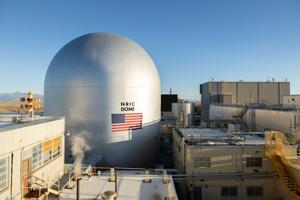
Deployable Energy to test its nuclear battery at INL's DOME
Postregister